 650,000 startups. 125 unicorns. $3.44 billion raised in Q1 alone. India’s startup ecosystem enters 2026 as the third-largest in the world by number of startups and total funding, behind only the United States and China. After navigating the 2023 funding winter and a strong recovery in 2024–25, the ecosystem has entered a phase of mature, disciplined growth.
India is entering a new phase of business driven by data and technology, and many pathbreaking companies are emerging, providing employment to approximately 23 lakh people. While a small concept can grow into a billion-dollar enterprise, mastering startup problem identification is what separates enduring businesses from short-lived trends.
| India Startup Ecosystem Metric (2026) | Key Benchmark |
|---|---|
| Global Ecosystem Ranking | 3rd Largest Worldwide (after US and China) |
| Total Startups | 6,50,000+ Ventures |
| Unicorns Created | 125 Unicorns |
| Q1 Funding Raised | $3.44 Billion |
| Direct & Indirect Employment | ~23 Lakh People |
How Founders Build High-Growth Companies
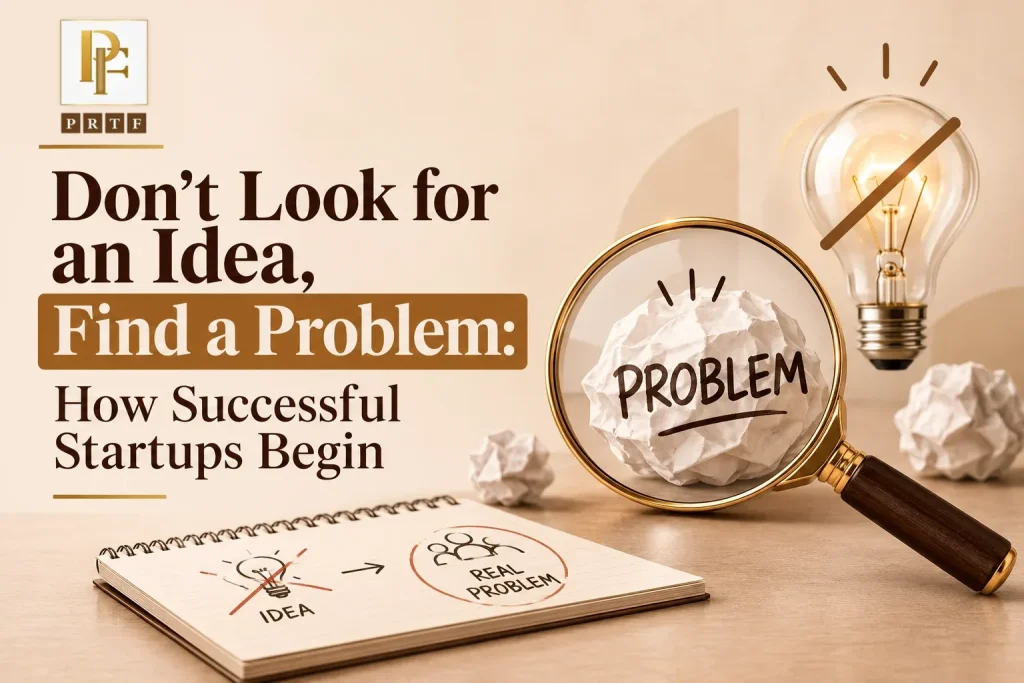
How do founders build category-defining companies within just a few years? It is rarely about chasing a clever idea in isolation. Instead, successful founders observe and identify a real friction point that everyday consumers or businesses face, and they build practical solutions around it. When target customers find a solution genuinely useful, organic adoption follows. The market signals demand, investors back the traction, and the venture scales. With modern technology becoming faster and far more accessible, entrepreneurship is no longer restricted to a select few—anyone with sharp observation and execution skills can build a lasting company if they start right.Identify a Problem Worth Solving
Problems exist across every sector, and only their nature evolves over time. Strong startup problem identification starts by examining everyday inefficiencies rather than inventing hypothetical needs:| Startup Example | Everyday Friction Before | Problem-First Solution |
|---|---|---|
| Zomato & Swiggy | Dining out or calling individual restaurants with limited discovery and delivery visibility | Transformed restaurant discovery and doorstep food delivery into seamless digital convenience |
| Practo | Long clinic waiting queues and unorganized doctor discovery for routine consultations | Enabled patients to search verified doctors and pre-book appointments effortlessly |
When to Start Your Startup Journey?
Becoming a founder goes beyond age, gender, or geography. Having the right mindset, learning structured venture development, and plugging into a supportive ecosystem accelerate your path from concept to market launch. A complete venture-building ecosystem brings together five essential pillars:- Modern technology stacks for rapid product development and MVP testing.
- A network of domain experts who understand sector-specific regulations and workflows.
- Mentors and guides who have already built and scaled businesses from scratch.
- Investors and specialists with proven experience in sales, marketing, networking, and fundraising.
- An ambitious peer group hungry to validate ideas and crack real markets.
What Is the Right Time to Build Your Own Startup?
There is no fixed calendar date or ideal age to launch a company. However, until you find a genuine problem for which customers are willing to pay for your solution, it is not the right time to scale. Today, founders aged anywhere from 16 to 50 are building impactful ventures driven by curiosity rather than routine compliance. Do not enter the startup journey merely because everyone else is doing so. Start with a clear purpose to solve a meaningful problem for many people—when you do, the journey brings deep learning, personal fulfilment, and long-term financial freedom.Turn a Real Problem into a Venture at PRTF Startup Hub
Planning to build something meaningful, or already spotted a problem worth solving? Join the PRTF Startup Hub at PRTF School of Management in Greater Noida. The hub is an integrated ecosystem offering a dedicated Founders Track inside our AICTE-approved PGDM programme for every student—so you do not just study entrepreneurship in theory, you graduate as a founder.- Explore the Program: Visit PRTF School of Management
- Start Your Application: Apply Now for PGDM 2027–29
Frequently Asked Questions
Startup Problem Identification, Timing & Venture Building
1. Why is startup problem identification more important than having an idea?
An idea without a real customer pain point rarely generates revenue. Identifying a validated problem ensures people actually need and are willing to pay for your solution before you invest time and capital.
2. How big is India’s startup ecosystem in 2026?
India ranks as the world’s third-largest startup ecosystem in 2026 with over 6,50,000 startups, 125 unicorns, $3.44 billion raised in Q1 alone, and roughly 23 lakh jobs created.
3. What is the right age or time to start a startup?
There is no specific age limit—founders from 16 to 50 build successful companies. The right time to start is when you have identified a clear problem and validated that customers will pay for your solution.
4. Do all successful startups need to become unicorns?
No. Many startups focus on solving specific regional or industry problems profitably, growing into resilient, sustainable businesses without chasing billion-dollar valuations.
5. How does PRTF Startup Hub help aspiring student founders?
PRTF Startup Hub integrates a hands-on Founders Track into PRTF School of Management’s PGDM programme, providing mentorship, product validation frameworks, and ecosystem support so students can build ventures while studying.