
Why Do Startups Fail? Top 10 Reasons, 2026 Data & How to Avoid Them
Understanding why do startups fail is essential for anyone planning to launch a business. Globally, 90% of startups fail over a period of time; roughly 20% close in year one, and 50%–65% close within 5–10 years. While the reasons are many, ventures that sustain and grow create immense value for society, the country, and the people associated with them. In India, official Ministry of Corporate Affairs (MCA) data as of January 31, 2026, recorded 6,789 closed (dissolved or struck off) startups out of 2,12,283 DPIIT-recognised startups, while broader ecosystem trackers like Tracxn report higher deadpool counts across all tracked companies.
Top 10 Reasons Behind Startup Failure
Startups are businesses with high scale potential, yet several operational and strategic missteps can derail a founder’s plan. Below are the top 10 factors that commonly contribute to a startup shutting down:
| Rank | Failure Factor | Core Cause & Business Impact |
|---|---|---|
| 1 | No Market Need / Poor Product-Market Fit | Building a product customers do not want or will not pay for (cited in ~42%–43% of startup post-mortems). |
| 2 | Running Out of Cash | Depleting runway through high burn rates, slow revenue, or an inability to raise follow-on funding. |
| 3 | Bad Timing | Launching too early before market readiness, too late after competitors capture share, or riding macro trends that fade. |
| 4 | Unsustainable Unit Economics & Pricing | Customer acquisition costs (CAC) exceeding customer lifetime value (CLTV), or pricing that fails to cover costs. |
| 5 | Team & Leadership Problems | Missing domain expertise, poor hiring decisions, or co-founder and leadership misalignment. |
| 6 | Getting Outcompeted | Being overtaken by larger incumbents or rivals with stronger distribution, pricing power, or differentiation. |
| 7 | Flawed or Unclear Business Model | Lacking a repeatable way to monetize or relying on unsustainable free or subsidized models. |
| 8 | Premature Scaling | Hiring, expanding, or spending aggressively before validating demand, retention, and repeatable operations. |
| 9 | Poor Marketing & Customer Neglect | Failing to build effective acquisition channels, ignoring user feedback, or suffering high churn. |
| 10 | Losing Focus or Failing to Pivot | Chasing too many directions at once, or holding onto a failing strategy instead of pivoting in time. |
While starting out, a founder may feel deeply enthusiastic about a product idea, but building a solution alone is never enough. Navigating a venture forward requires a careful, scientific, and rational approach to sustain long-term growth.
Global Startup Failure Trends & Data Breakdown
When analysts examine why do startups fail across global ecosystems, consistent financial and operational patterns emerge rather than isolated bad luck:
| Failure Dimension | Key Research Benchmarks |
|---|---|
| Cash & Runway Limits | Cited as the immediate end point in 70% of VC-backed shutdowns analyzed by CB Insights, with a median of 22 months between a startup’s last fundraise and closure. |
| Market Need & Fit | Around 42%–43% of failures stem from building products without sufficient customer demand or failing to adapt quickly enough. |
| Timing, Unit Economics & CAC | Bad market timing (~29%), unsustainable unit economics (~19%), and rising customer acquisition costs in crowded markets frequently sink otherwise functional products. |
| Team & Execution Missteps | Co-founder and team conflicts (~23%), poor marketing or pricing strategies, and delayed pivots weigh heavily on survival. |
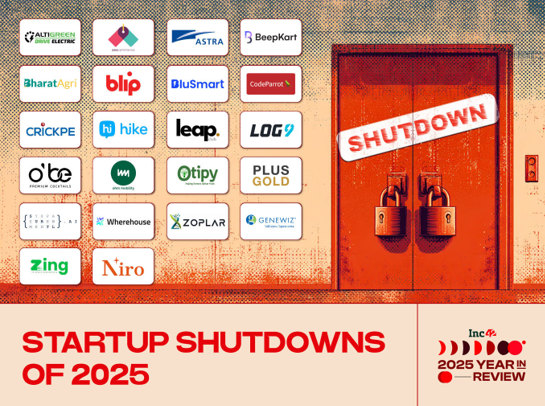
It is evident that funding shortages alone do not explain shutdowns; survival depends equally on product-market fit, ease of adoption, cash discipline, and team alignment. Recent industry tracking, including Inc42’s analysis of Indian startup closures, reinforces how unit economics and governance determine long-term resilience.
How to Plan Your Startup Journey Effectively
If you are building a startup, or you are a student curious about launching one, structured planning is essential. Avoid impulsive decisions and rely on validated execution:
- Validate customer pain points before writing code or spending capital on inventory.
- Track unit economics and monthly cash burn closely from day one.
- Stay open to learning about business models, industry shifts, competitors, and distribution strategies.
- Build complementary co-founder teams with clear accountability and aligned long-term goals.
- Test hypotheses quickly and pivot based on real user retention data rather than assumptions.
👉 Read more: Startup Founder Mentorship in Greater Noida: Mentors & Panel
Learn to Build & Scale with PRTF’s Founders Track
Learning how to avoid these common pitfalls is exactly what the Founders Track at PRTF School of Management is built for. Located in Greater Noida, PRTF offers an AICTE-approved, startup-focused PGDM programme designed alongside founders, ex-founders, innovators, and industry leaders. Run through the PRTF Startup Hub, the programme guides every student through the structured process of validating problems, building an MVP, managing startup finance, and launching a venture—so you learn business hands-on and graduate ready to lead your own company.
- Explore PRTF: Visit PRTF School of Management
- Apply Online: Apply Now for PGDM 2027–29